Website Audit Mistakes That Can Cost Your Organic Traffic
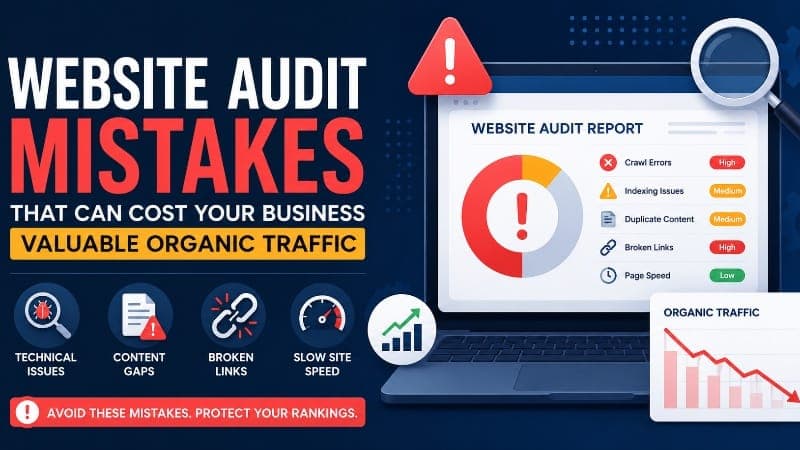
Businesses invest significant time and resources into improving their search engine visibility. They publish content, optimize landing pages, build backlinks, and implement various SEO strategies to attract potential customers through organic search.
Yet despite these efforts, many organizations struggle to achieve sustainable growth in rankings and traffic.
In some cases, the issue is not a lack of SEO activity. Instead, it is the result of problems that remain hidden within the website itself.
This is why website audits have become a critical component of modern SEO strategies.
A website audit helps identify technical issues, content weaknesses, user experience challenges, and structural problems that may limit search visibility. However, simply conducting an audit is not enough.
Many businesses make mistakes during the audit process that prevent them from identifying the issues that truly matter.
These mistakes can lead to lost rankings, reduced traffic, missed opportunities, and wasted marketing budgets.
Understanding these common website audit mistakes can help businesses create stronger SEO foundations and maximize the value of their optimization efforts.
Why Website Audits Matter for SEO Success
Search engines evaluate hundreds of factors when determining rankings.
A website may contain excellent content and still struggle to perform because of:
- Technical issues
- Crawlability problems
- Poor site architecture
- Weak internal linking
- Mobile usability concerns
Website audits provide visibility into these factors and help businesses understand where improvements are needed.
A free SEO website audit can serve as an excellent starting point by identifying obvious weaknesses before more advanced optimization begins.
However, the effectiveness of an audit depends heavily on how it is conducted and interpreted.
Mistake #1: Treating a Website Audit as a One-Time Activity
One of the most common mistakes businesses make is viewing a website audit as a single project.
Websites are constantly evolving.
New pages are added.
Content is updated.
Plugins change.
Technology evolves.
Search engine algorithms continue to develop.
Because of these ongoing changes, issues can emerge at any time.
Businesses that conduct audits only once often miss new problems that develop over time.
A website audit should be treated but it represents only one aspect of website performance.
Many organizations conduct audits that focus exclusively on:
- Broken links
- Redirects
- Crawl errors
- Site speed
While these areas matter, SEO success also depends on:
- Content quality
- Search intent alignment
- User experience
- Conversion optimization
A website may be technically flawless and still perform poorly because its content fails to meet user expectations.
Comprehensive audits evaluate both technical and strategic factors.
Mistake #3: Ignoring User Experience Signals
Many businesses view website audits strictly through the lens of search engines.
However, search engines increasingly reward websites that provide strong user experiences.
Common user experience issues include:
- Difficult navigation
- Slow page loading
- Confusing layouts
- Poor mobile experiences
- Weak calls to action
These problems may not always trigger technical SEO warnings, but they can significantly affect engagement and conversions.
A complete website audit should always include user experience analysis.
Mistake #4: Overlooking Mobile Performance
Mobile traffic now dominates many industries.
Despite this reality, some businesses still evaluate websites primarily from a desktop perspective.
Mobile-specific issues often include:
- Slow loading times
- Unresponsive layouts
- Difficult navigation
- Form usability problems
Search engines prioritize mobile experiences when evaluating websites.
Ignoring mobile performance during a website audit can lead to missed opportunities and reduced rankings.
Mistake #5: Failing to Analyze Crawlability
Search engines cannot rank content they cannot properly crawl.
Unfortunately, crawlability issues often go unnoticed because they are invisible to most website visitors.
Common crawlability problems include:
- Broken internal links
- Orphan pages
- Incorrect robots.txt configurations
- Redirect loops
A website audit should evaluate in search results.
In reality, important pages may be excluded because of:
- Noindex tags
- Canonical errors
- Duplicate content
- Sitemap issues
A website audit helps determine which pages are indexed and which are being ignored by search engines.
Without this analysis, businesses may spend resources optimizing pages that never appear in search results.
Mistake #7: Not Evaluating Content Quality
Content remains one of the most influential SEO factors.
However, many website audits focus on quantity rather than quality.
Businesses often discover issues such as:
- Thin content
- Outdated information
- Duplicate pages
- Poor keyword targeting
Content audits help identify pages that require improvement and reveal opportunities for growth.
Ignoring content little visibility because of weak internal linking.
Common issues include:
- Orphan pages
- Broken internal links
- Poor authority distribution
- Missed contextual linking opportunities
A website audit should evaluate how pages connect and support one another.
Strong internal linking often delivers significant SEO improvements without requiring new content.
Mistake #9: Ignoring Conversion Performance
Traffic alone does not generate business results.
A website may rank well and attract visitors while failing to convert them into leads or customers.
Conversion-related audit findings often include:
- Weak calls to action
- Poor landing pages
- Long forms
- Confusing user journeys
Businesses that focus only on rankings may overlook these critical issues.
A complete website audit everything simultaneously.
Not all issues carry equal importance.
Some problems may significantly impact rankings, while others have minimal influence.
Effective audits prioritize findings based on:
- Business impact
- SEO importance
- Implementation complexity
This helps organizations allocate resources more efficiently.
Mistake #11: Ignoring Competitor Insights
Website audits should not occur in isolation.
Competitor analysis provides valuable context regarding:
- Content strategies
- Keyword opportunities
- Site structures
- Search visibility
Without competitor benchmarking, businesses may struggle to understand where they stand within their industry.
Including competitive analysis strengthens the value of website audits.
Mistake #12: Not Connecting Audits to SEO Budget Planning
Many organizations separate website audits from budgeting decisions.
This creates a disconnect between identified issues and available resources.
Audit findings often influence:
- Content investment requirements
- Technical SEO costs
- Development priorities
- Ongoing optimization needs
Businesses frequently use an SEO cost calculator after an audit to estimate resource requirements and forecast future investments more accurately.
This helps transform audit findings into actionable plans.
Mistake #13: Choosing Recommendations Without Strategic Context
Some businesses treat every audit recommendation as equally important.
However, SEO priorities vary depending on:
- Business goals
- Industry competition
- Website size
- Growth objectives
A recommendation that benefits one website may have little impact on another.
Website audits should always be interpreted within the broader context of business strategy.
Mistake #14: Failing to Involve Stakeholders
SEO improvements often require collaboration between:
- Marketing teams
- Developers
- Content creators
- Leadership teams
When audits remain isolated within one department, implementation becomes difficult.
Sharing findings across stakeholders improves accountability and increases the likelihood of successful execution.
Mistake #15: Waiting Until Performance Declines
Many businesses conduct audits only after rankings or traffic begin to decline.
This reactive approach often allows issues to grow before they are addressed.
Proactive website audits help identify risks before they affect performance.
Organizations that conduct regular audits are generally better positioned to maintain consistent search visibility.
Why Enterprise Websites Face Greater Audit Challenges
Enterprise websites often contain thousands of pages and complex technical infrastructures.
As a result, audit mistakes can have much larger consequences.
Large organizations commonly encounter:
- Extensive duplicate content
- Crawl budget inefficiencies
- Site architecture challenges
- Large-scale indexing problems
Many businesses partner with an enterprise SEO agency to conduct comprehensive audits and manage large-scale optimization initiatives.
Enterprise audits require specialized expertise because small issues can affect hundreds or thousands of pages simultaneously.
Why Website Audits Help Protect Businesses From Algorithm Updates
Search engine algorithms are constantly evolving. Google alone introduces thousands of updates every year, ranging from minor adjustments to major core updates that can significantly impact rankings and organic traffic.
One of the biggest challenges businesses face is that algorithm updates often expose weaknesses that have existed on a website for months or even years. Issues such as thin content, poor user experience, weak internal linking, slow page speeds, duplicate content, and technical SEO problems may go unnoticed during normal operations. However, when search engines update their ranking systems, these weaknesses can suddenly affect visibility and traffic.
This is where regular website audits become extremely valuable.
A comprehensive website audit helps businesses identify vulnerabilities before they become ranking problems. Instead of reacting to traffic declines after an algorithm update, organizations can proactively improve website quality and reduce risk.
Website audits also help businesses align their websites with modern SEO best practices. Search engines increasingly prioritize factors such as user experience, content relevance, mobile performance, and website trustworthiness. Audits provide a structured way to evaluate these areas and ensure that optimization efforts remain aligned with changing search engine expectations.
For enterprise websites, the importance of proactive auditing is even greater. Large websites often contain thousands of pages, making it difficult to detect issues manually. Regular audits help uncover sitewide problems that could negatively affect rankings when algorithm updates occur.
Ultimately, businesses that conduct regular website audits are typically better prepared for search engine changes. Rather than scrambling to recover lost rankings, they can focus on growth, knowing that their website is built on a strong and sustainable SEO foundation.
Building an Effective Website Audit Process
A successful website audit should evaluate:
Technical Health
Technical SEO provides the foundation for search visibility.
Content Performance
Content quality directly influences rankings and engagement.
User Experience
Visitors must be able to navigate and interact with the website effectively.
Conversion Optimization
Traffic should contribute to measurable business outcomes.
Competitive Positioning
Understanding competitors helps identify opportunities and threats.
When these areas are analyzed together, businesses gain a more complete understanding of website performance.
The Long-Term Benefits of Better Website Audits
Organizations that avoid common audit mistakes often experience:
- Improved rankings
- Higher organic traffic
- Better lead generation
- Stronger conversion rates
- More efficient SEO investments
Website audits become far more valuable when they focus on continuous improvement rather than isolated technical checks.
Conclusion
A website audit is one of the most powerful tools available for improving SEO performance, but its value depends on how effectively it is conducted.
Mistakes such as ignoring user experience, overlooking content quality, neglecting mobile performance, and failing to prioritize findings can limit the effectiveness of even the most detailed audits.
Whether you're starting with a free SEO website audit, planning investments through an SEO cost calculator, or working with an enterprise SEO agency, the goal should always be the same: uncover the issues that truly affect visibility, traffic, and business growth.
Businesses that conduct comprehensive, strategic website audits position themselves for stronger rankings, better user experiences, and more sustainable long-term SEO success.
Henry Will
Contributor at Jorvea — Free Guest Blogging & Content Publishing Platform
Frequently Asked Questions
What is a website audit in SEO?
A website audit is a comprehensive analysis of a website’s technical health, content quality, user experience, and SEO performance to identify issues that may affect rankings and traffic.
How often should a website audit be performed?
Most businesses should conduct a website audit at least every six months, while larger websites may benefit from quarterly audits.
Can a website audit improve organic traffic?
Yes. A website audit identifies technical and content-related issues that may be limiting search visibility, helping businesses improve rankings and traffic over time.
Why is a website audit important before starting SEO?
An audit provides a clear understanding of existing issues and opportunities, ensuring SEO efforts focus on the areas that will deliver the greatest impact.
Should enterprise websites conduct more frequent audits?
Yes. Enterprise websites are more complex and experience frequent changes, making regular audits essential for maintaining SEO performance and preventing large-scale issues.