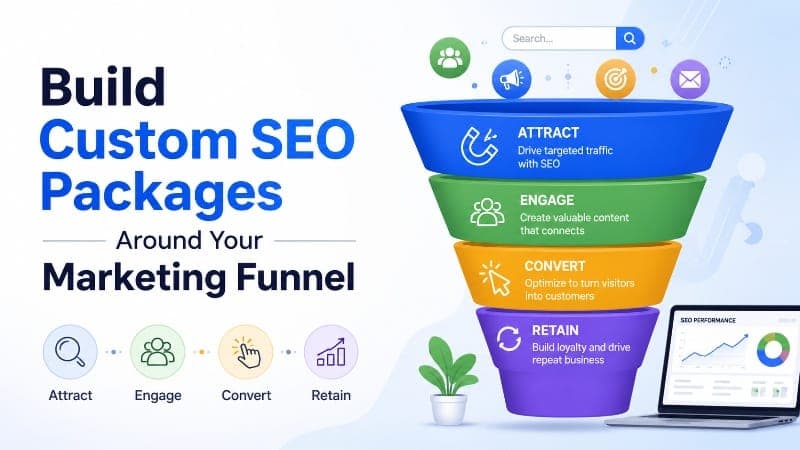
Build Custom SEO Packages Around Your Marketing Funnel
Bundles of services, long lists of features, different tiers at different prices. But do those SEO packages actually match what your business needs… or are you just picking something that “looks about right”?
If you want search engine work that brings in the right visitors and gently walks them from “never heard of you” to “ready to buy,” your SEO packages have to be built around your goals and your marketing funnel. Not just “more keywords, more blogs, more links.”
The good news? You can build simple, clear,
that line up with each stage of your funnel and keep your visitors moving toward a sale. And yes, you can still keep them as affordable SEO packages that make sense for your budget and growth plans. Whether you want full-service help or low-cost SEO packages that just cover the basics, the idea is the same - every action should move you closer to real results.
What Does A Custom SEO Package Include?
Custom SEO packages bring to you a set of services. They’re chosen for your goals, your funnel, and your budget. Most of these packages pull from the same core building blocks. The difference is in which ones you include, and how much weight each one gets.
A custom SEO package covers -
Technical SEO - site speed, mobile-friendliness, crawlability, and fixing the behind-the-scenes issues that quietly hold your rankings back.
Keyword research - finding the exact phrases your ideal customers search at each stage, from early questions to ready-to-buy terms.
On-page optimization - clear titles, headings, internal links, and content structure that help both search engines and people understand your pages.
Content creation - blogs, guides, comparison pages, and product pages mapped to awareness, consideration, and decision stages.
Local SEO - Google Business Profile optimization and location-based content, essential for businesses serving a specific area.
Link building - earning mentions and links from relevant, credible sites to strengthen your overall authority.
Reporting and tracking - regular updates on traffic, leads, and revenue from search, not just keyword rankings.
The key word is custom. A local service business lean on local SEO and bottom-of-funnel pages. A growing e-commerce brand might prioritize content and technical work. The right package includes what moves you towards your goals.
Steps To Create Custom SEO Packages
So here is a simple breakdown, so you know exactly what to include, how to think about SEO pricing packages, and how to make sure every action actually supports your revenue, not just your rankings.
Step 1 - Get Clear on Your Goals and Your Audience
Before you even think about services, tools, or prices, pause for a second. What do you actually want from your SEO packages?
Bring in more high-quality leads for your sales team? Increase online sales from your store? Your goals decide what goes into your bundle. If you want more sales, you will build very different SEO packages than if you mainly want more people to recognize your brand name. Next, think about who you are trying to reach. Who are your ideal customers? What annoys them? What are they trying to fix? What do they type into Google when they - First, realize they have a problem Start comparing different options Are you ready to choose and buy When you know your goals and your audience this clearly, every part of your SEO work has a job to do instead of being there “just because.” Now it’s time to look under the hood. Before you add anything new to your SEO packages, you need to know what is already working and what is quietly holding you back. Start with a basic website check - Can search engines find and move through your pages easily? Does your site load fast, especially on phones? Does everything look and work well on mobile? Then move to keywords. Make a list of words and phrases your ideal customers use. Group them by intent. Early-stage questions - hows and whats. Comparison searches - best, vs, review. Ready-to-buy searches - buy, pricing, near me. What topics do they cover that you ignore? Where are they getting traffic that you are missing? This helps you see clear gaps and easy wins you can plug into your SEO packages. This kind of audit keeps you from buying “cheap but useless” deals and helps you shape simple, affordable SEO packages that actually help. With this review and research done, you can build a simple, focused plan instead of guessing. Here’s where it all comes together. Instead of stuffing everything into one messy bundle, you design your SEO packages around your marketing funnel - Top of the funnel - people just realizing they have a problem Middle of the funnel - people comparing options Bottom of the funnel - people ready to decide and buy Each stage needs different content and different SEO actions. Goal - Help people who are just starting to look for answers and do not yet know that your product or service is the solution. Here, your package might include - Helpful content like blog posts, guides, videos, and FAQs that answer common questions Focus on longer, more detailed keyword phrases that match early-stage searches Simple on-page cleanup - clear page titles, headings, and internal links so search engines and people understand your content Outreach and links from relevant sites to boost your overall visibility This part of your plan makes sure new people can actually find you when they are still in research mode. Goal - Help visitors understand their options and see why your solution is a strong choice. Here, your services shift slightly. Your SEO packages for this stage might include - Comparison content such as “A vs B” pages, case studies, and detailed guides that show real results Pages that offer useful downloads or resources in exchange for an email, so you can keep in touch Simple tweaks that make pages easier to use and act on - clearer buttons, better internal links, more focused layouts Extra details added to your pages that can show up in search results (like star ratings or FAQs) and make your listing stand out This is where you build trust and move people closer to choosing you over someone else. Goal - Turn interested visitors into paying customers, booked calls, sign-ups, or demo requests. Now you focus your SEO packages on the pages that drive money - Product and service pages built around strong, “ready to buy” keywords like “pricing,” “near me,” or “best [service] in [location]” Clean, fast checkout or contact forms so nothing breaks when someone is trying to pay or reach out Reviews, ratings, and testimonials on key pages, so people feel safe choosing you For local businesses, clear local search work - updated Google Business Profile and location-based content so nearby buyers can find you fast This is the stage where small technical issues or missing trust signals can quietly kill conversions, so your package should protect you from that. Now that you know what should go into your SEO packages, you can think about cost and results. Instead of copying someone else, you can shape your SEO pricing packages around - The size of the website How competitive your market is How much work is needed based on your audit How fast do you want to see results This is also where you think about whether you want more premium bundles or more affordable SEO packages for smaller clients or tighter budgets. You can even design low-cost SEO packages focused on just one stage of the funnel, like only awareness content or only product page fixes, to get quick wins without a huge spend. Whatever you choose, make sure your SEO pricing packages are tied to clear goals. Set simple, specific targets, such as - Increase organic traffic by a set percentage in a set time Bring in more qualified leads from search Grow online sales or booked calls from search visitors Then report on those numbers regularly. Your reports should show changes in traffic, leads, sales, and revenue from search, not just keyword rankings. This way, your low-cost SEO packages and your more advanced bundles can all be judged by the same standard - are they helping you grow? When you build SEO packages around your funnel, your audience, and your goals, every action has a purpose. You stop paying for random tasks and start investing in a clear system that attracts the right people, guides them with useful content, and turns them into customers. The strongest SEO packages are built around how people search, compare, and decide, so you’re not only bringing in traffic, you’re guiding it. If your current plan doesn’t support awareness, consideration, and decision stages, what’s happening to all the people who aren’t ready to buy today? And what about the ones who are ready but can’t find enough proof to choose you? That’s exactly why well-built SEO packages win!Step 2 - Audit What You Already Have And Build A Simple Plan
Step 3 - Match Your SEO Services To The Stages Of Your Funnel
Top of the Funnel (Awareness)
Middle of the Funnel (Consideration)
Bottom of the Funnel (Decision)
Step 4 - Set Prices, Reports, And Success Metrics That Make Sense
SEO Packages That Help You Grow
Planning to get Custom SEO Packages? Learn what to include in SEO packages so your budget supports real leads and sales.
The Scale Rankings
Contributor at Jorvea — Free Guest Blogging & Content Publishing Platform
Frequently Asked Questions
How do I know which stage of the marketing funnel needs the most SEO attention?
Start by reviewing your website data, lead sources, and conversion rates. If traffic is low, focus on awareness-stage SEO. If traffic is strong but leads are weak, improve consideration-stage content. If leads are not converting into customers, optimize decision-stage pages such as service, product, and pricing pages.
Can I create an effective SEO package with a limited budget?
Yes. You can build affordable SEO packages by prioritizing the activities that align with your current goals. For example, a small business may focus on local SEO and service page optimization first, while delaying larger content or link-building campaigns until later.
What is the difference between a custom SEO package and a standard SEO package?
A standard SEO package offers the same set of services to every business. A custom SEO package is tailored to your industry, audience, marketing funnel, business goals, and budget, ensuring every SEO activity supports measurable growth.
How often should I review and update my SEO package?
Review your SEO package at least every 3–6 months. As your business goals, competition, website performance, and customer behavior change, your SEO strategy should evolve to keep supporting traffic growth, lead generation, and sales.