PMP Exam Prep Roadmap 2026: Step-by-Step Plan for Exam Day
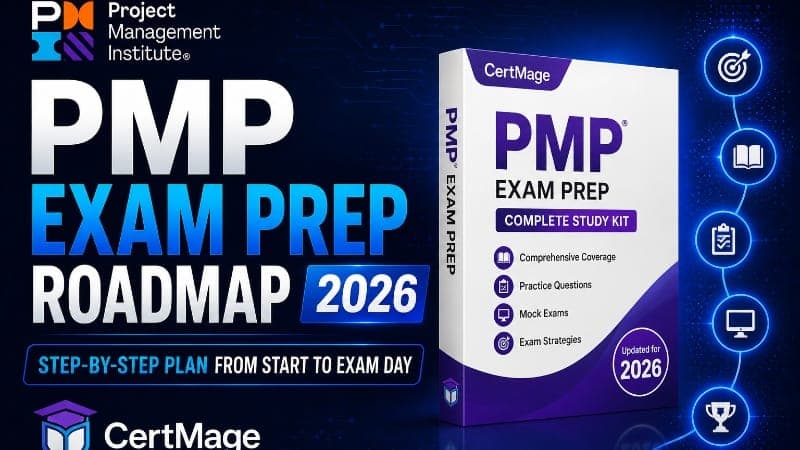
The PMP exam prep journey in 2026 needs a clear roadmap because PMI is updating the PMP exam on July 9, 2026. The new version gives more attention to AI, sustainability, stakeholder engagement, outcomes, and value delivery. It also changes the exam domain weights to People 33%, Process 41%, and Business Environment 26%.
For candidates, this means preparation should not be random. You need a plan that starts with exam version selection and ends with final revision before exam day.
Stage 1: Decide Which PMP Exam Version You Will Take
Your first step is choosing the right exam timeline. If your exam is on or after July 9, 2026, use the updated 2026 PMP Exam Content Outline.
PMI confirms that the PMP exam changes on July 9, 2026, so this date should guide your study material choice.
| Timeline | Study Material to Use | Best Action |
|---|---|---|
| Before July 9, 2026 | Current PMP ECO | Continue with current resources |
| July 9, 2026 or later | Updated 2026 PMP ECO | Study new domains and focus areas |
| Exam not booked yet | Compare both versions | Pick your date before buying resources |
Stage 2: Read the Exam Content Outline First
Before opening any course, guide, or question bank, read the PMP Exam Content Outline. PMI states that PMP questions are mapped to the ECO, which helps ensure the exam is valid and balanced.
The ECO explains the domains, tasks, and knowledge areas that candidates should understand. This document should become your main checklist.
For the updated 2026 exam, focus on:
- People: 33%
- Process: 41%
- Business Environment: 26%
- Predictive approaches
- Agile approaches
- Hybrid delivery
- AI and sustainability
- Outcomes and business value
Stage 3: Build Your Foundation
Once you understand the outline, review project management fundamentals. Do not jump directly into mock exams. First, make sure you understand the language of project management.
Study these core areas:
- Scope management
- Schedule management
- Cost management
- Quality management
- Risk management
- Resource planning
- Stakeholder engagement
- Communication planning
- Procurement basics
- Change control
- Governance
- Project lifecycle models
These topics remain important because PMP questions often test how you apply them in real project situations.
Stage 4: Study the Three Domains Separately
After building the foundation, divide your study time by domain.
People
This domain focuses on leadership, team performance, conflict handling, collaboration, coaching, communication, and stakeholder support. Even though its weight changes from 42% to 33%, it remains a major part of the exam.
Process
This is still the largest exam area at 41%. Study planning, execution, delivery, risk, quality, change, resources, schedule, and project controls.
Business Environment
This domain becomes much more important in 2026, increasing from 8% to 26%. Candidates should study value delivery, compliance, benefits, strategy, governance, and organizational impact.
Stage 5: Add 2026-Specific Topics
The updated PMP exam reflects modern project work. PMI highlights AI, sustainability, stakeholder engagement, outcomes, and value as major focus areas.
For AI, understand how project managers may use tools for planning, reporting, risk analysis, communication, and decision support.
For sustainability, think about long-term project impact. It should also support business goals, responsible decisions, and lasting value.
Stage 6: Start Practice Questions After Concept Study
Practice questions should come after you understand the basics. If you start too early, you may memorize answers without learning the logic.
Use practice questions to test:
- Decision-making
- Scenario judgment
- Time management
- Weak topics
- Domain understanding
- Agile, hybrid, and predictive thinking
Review every wrong answer carefully. Ask why the correct answer is better and why the other choices are weaker. This is where real improvement happens.
You can also use Cert Mage once during your PMP preparation if you want exam-style practice questions to check your readiness before exam day.
Stage 7: Take Mock Exams Near the Final Phase
Mock exams should be used after you complete most topics. They help you understand timing, mental stamina, and question style.
Do not take a mock exam only to see the score. Use it as a review tool. After each mock, list your weak areas and revise them before taking another test.
Your mock review should include:
- Questions you guessed
- Questions you missed
- Topics that appeared repeatedly
- Time pressure areas
- Confusing scenario patterns
Stage 8: Create a Final 7-Day Review Plan
The last week should be for revision, not heavy new learning. Review notes, formulas, domain summaries, agile concepts, business value topics, and common scenario patterns.
A simple final-week plan can look like this:
- Day 1: Review People domain
- Day 2: Review Process domain
- Day 3: Review Business Environment
- Day 4: Review AI, sustainability, and value topics
- Day 5: Review wrong answers from mocks
- Day 6: Light practice and formula review
- Day 7: Rest, check documents, and prepare for exam day
Stage 9: Exam Day Preparation
On exam day, avoid last-minute panic. Reach the test center early or check your online testing setup in advance. Keep your identification ready and follow PMI testing rules.
During the exam, read each question carefully. PMP questions often include extra information. Focus on what the project manager should do next, first, or best.
When two answers look correct, choose the one that supports communication, collaboration, value delivery, stakeholder alignment, and responsible project leadership.
Watch Cert Mage’s YouTube video for a complete and easy explanation.

Final Thoughts
The PMP exam prep roadmap for 2026 should begin with one clear decision: current exam or updated exam. After that, use the correct ECO, study the three domains, add new 2026 topics, practice scenario questions, take mock exams, and revise weak areas before exam day.
The updated PMP exam rewards practical thinking. Candidates who understand project value, leadership, adaptive delivery, and business impact will be better prepared than those who only memorize terms.
📖 Read more blogs: Jorvea — Free Guest Blogging & Content Publishing Platform
Frequently Asked Questions
What is PMP Exam Prep Roadmap 2026: Step-by-Step Plan for Exam Day?
The PMP exam prep journey in 2026 needs a clear roadmap because PMI is updating the PMP exam on July 9, 2026. The new version gives more attention to AI, sustainability, stakeholder engagement, outcom...
Why is PMP Exam Prep Roadmap 2026: Step-by-Step Plan for Exam Day important?
This article explains the key aspects of PMP Exam Prep Roadmap 2026: Step-by-Step Plan for Exam Day in detail, covering essential information and practical insights.
How can I learn more about education?
Read the full article on Jorvea for comprehensive information about PMP Exam Prep Roadmap 2026: Step-by-Step Plan for Exam Day and related topics.