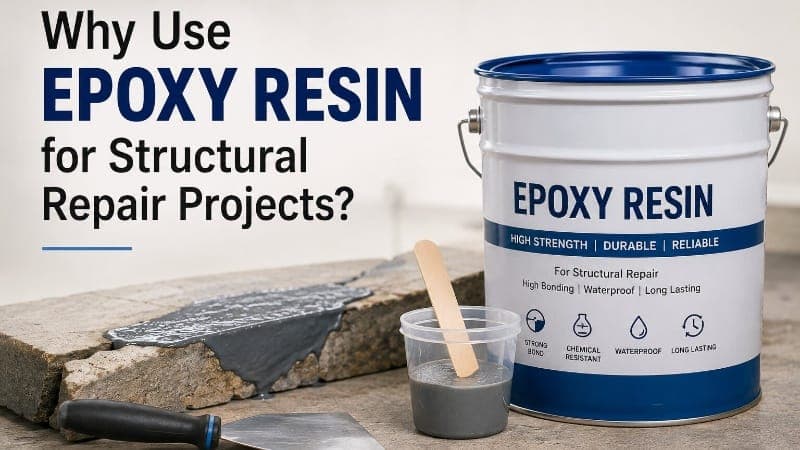
Why Use Epoxy Resin for Structural Repair Projects?
Buildings and infrastructure are designed to withstand years of service, but exposure to heavy loads, moisture, chemicals, temperature fluctuations, and environmental conditions can gradually weaken structural components. When cracks, surface deterioration, or damaged concrete begin to appear, selecting the right repair solution becomes essential for restoring strength and extending the life of the structure. Modern repair projects focus not only on fixing visible damage but also on improving long-term structural performance.
Choosing a trusted construction chemicals supplier in Pakistan helps engineers and contractors obtain high-quality materials that meet demanding repair requirements. Advanced repair chemicals improve bonding, enhance durability, and protect repaired areas against future deterioration, making them a valuable part of modern construction and rehabilitation projects.
As repair technologies continue to evolve, resin-based systems have become an important solution for restoring structural integrity. Their ability to create strong bonds, resist environmental stress, and perform under demanding conditions makes them suitable for a wide variety of repair applications.
Structural Repairs Require More Than Surface-Level Solutions
Visible cracks or damaged concrete often indicate deeper structural issues. Simply covering the affected area may improve appearance temporarily, but it rarely addresses the underlying problem.
Modern repair materials are developed to strengthen weakened sections while improving resistance against future damage.
Some of the primary goals of structural repair include:
- Restoring the original strength of damaged concrete elements.
- Reducing moisture penetration into vulnerable structural areas.
- Improving bonding between old and newly placed materials.
- Increasing durability under continuous mechanical loading.
- Protecting reinforcement from further deterioration.
- Extending the operational life of valuable infrastructure.
Successful repairs focus on restoring both structural performance and long-term reliability rather than providing only cosmetic improvements.
Understanding the Common Causes of Structural Damage
Every repair project begins with identifying why the damage occurred. Addressing only the visible defect without resolving the underlying cause often leads to recurring problems.
Moisture Penetration
Water is one of the most common reasons concrete structures deteriorate over time. Moisture entering through cracks or porous surfaces may eventually reach reinforcing steel, leading to corrosion and internal expansion.
Proper repair systems help seal damaged areas while reducing future water infiltration.
Continuous Mechanical Stress
Buildings, bridges, and industrial facilities experience repeated loading throughout their service life. Heavy equipment, vehicle movement, and constant occupancy gradually place stress on structural components.
Repair materials should withstand these repeated forces without losing their effectiveness.
Environmental Exposure
Structures located in coastal regions, industrial zones, or areas with changing weather conditions face additional challenges.
Temperature changes, humidity, chemical exposure, and airborne contaminants can all contribute to concrete deterioration if protective measures are not implemented during repair.
Strong Bonding Is the Foundation of Lasting Repairs
One of the most important characteristics of any structural repair material is its ability to bond securely with the existing concrete.
A weak connection may allow movement between repaired and original surfaces, increasing the likelihood of future cracking or separation.
Improved Load Distribution
Strong adhesion enables repaired sections to transfer loads efficiently throughout the surrounding structure.
This reduces stress concentrations that could otherwise accelerate further damage.
Better Structural Continuity
When repair materials create a strong bond, restored sections perform more like the original structure instead of functioning as separate layers.
This improves the overall stability of the repaired section.
Reduced Maintenance Requirements
Durable bonding minimizes repair failures, helping property owners avoid repeated maintenance and unexpected repair costs.
Long-lasting repairs also reduce operational disruptions in commercial and industrial environments.
Different Structural Repairs Require Different Material Properties
Every repair project presents unique technical requirements. Selecting suitable repair materials depends on the type of damage, environmental conditions, and expected service life.
| Structural Condition | Desired Repair Performance |
| Fine surface cracks | Prevent moisture entry and surface deterioration |
| Deep concrete cracks | Restore strength and structural continuity |
| Concrete spalling | Replace damaged material and protect reinforcement |
| Industrial floor damage | Improve wear resistance and surface durability |
| Joint deterioration | Maintain flexibility while preventing leakage |
| Chemical attack | Resist aggressive industrial environments |
Matching repair materials to project requirements improves repair quality while reducing the likelihood of future failures.
Mechanical Strength Remains a Critical Performance Requirement
Structural repairs must restore the ability of concrete members to carry design loads safely. High mechanical performance allows repaired areas to continue functioning alongside the surrounding structure.
Several characteristics contribute to dependable repair performance.
High Compressive Strength
Repair materials should withstand significant compressive forces without deformation or premature failure.
This becomes particularly important in columns, beams, foundations, and heavily loaded floor systems.
Reliable Tensile Performance
Concrete naturally performs well under compression but is relatively weak in tension.
Repair systems that improve tensile performance help minimize crack propagation and support better structural stability.
Resistance to Shrinkage
Excessive shrinkage during curing can create new cracks that reduce repair effectiveness.
Materials with controlled shrinkage characteristics provide greater dimensional stability throughout the curing process.
Proper Surface Preparation Determines Repair Success
Even advanced repair materials cannot achieve optimal performance without careful preparation of the damaged surface.
Several preparation steps contribute significantly to repair quality.
- Remove weak concrete before applying repair materials.
- Eliminate dust, grease, and loose contaminants completely.
- Prepare roughened surfaces to improve mechanical bonding.
- Repair active leaks before beginning structural restoration.
- Follow recommended mixing and curing procedures carefully.
- Inspect repaired areas before returning structures to service.
Proper preparation creates suitable conditions for strong adhesion and long-term structural performance.
Structural Repairs Support Numerous Construction Applications
Modern repair technologies are used across a broad range of construction sectors where safety and durability remain top priorities.
Commercial Buildings
Office buildings, shopping centers, educational institutions, and parking structures often require repairs that restore structural integrity without interrupting daily operations.
Effective repair materials help minimize downtime while extending building service life.
Industrial Facilities
Factories and manufacturing plants place continuous stress on structural elements due to heavy machinery, production equipment, and frequent operational activity.
Durable repair systems restore damaged concrete while supporting demanding industrial conditions.
Transportation Infrastructure
Bridges, tunnels, flyovers, and highways experience constant mechanical loading and environmental exposure.
High-performance repair materials help preserve these critical structures by improving durability and reducing maintenance frequency.
Long-Term Durability Depends on the Right Repair System
A successful structural repair should continue performing long after the work is completed. Selecting durable repair materials helps reduce maintenance requirements while preserving the strength and safety of the structure.
Modern repair systems are designed to withstand environmental exposure, repeated loading, and daily operational demands without significant loss of performance.
Resistance to Environmental Conditions
Structures constantly face exposure to rainfall, humidity, sunlight, changing temperatures, and environmental pollutants. These environmental factors can gradually weaken untreated concrete and shorten the lifespan of repair work.
Repair materials with excellent weather resistance help protect structural components against moisture penetration, surface deterioration, and seasonal expansion and contraction.
Protection Against Chemical Exposure
Industrial environments often expose concrete to oils, cleaning agents, fuels, and various chemicals that may accelerate deterioration.
Repair systems with enhanced chemical resistance create a protective barrier that helps preserve structural integrity even in demanding working environments.
Improved Service Life
Durable repairs reduce the frequency of maintenance and lower lifecycle costs. By restoring damaged concrete with high-performance materials, property owners can extend the useful life of buildings and infrastructure while minimizing operational disruptions.
Repair Solutions Help Restore Different Structural Components
Structural rehabilitation is not limited to repairing visible cracks. Various building elements require specialized repair techniques depending on their condition and intended function.
Beams and Columns
Throughout a structure, beams and columns are responsible for supporting major structural loads. Damage to these components should be addressed promptly to restore load-bearing capacity and maintain overall stability.
Proper repair solutions improve bonding with existing concrete while reinforcing weakened sections.
Concrete Slabs
Concrete slabs experience constant traffic, equipment movement, and environmental exposure. Surface deterioration, cracking, and abrasion gradually reduce their performance.
Repair systems strengthen damaged slabs while improving durability and resistance to future wear.
Foundations
Foundation repairs require materials capable of maintaining structural stability under continuous loading and varying soil conditions.
High-quality repair systems help reinforce weakened foundation areas while reducing the risk of moisture-related deterioration.
Modern Resin Technologies Improve Repair Performance
Construction repair methods have advanced considerably over the past several decades. Resin-based technologies are now widely used because they provide exceptional bonding strength, durability, and versatility across numerous repair applications.
These materials support reliable repairs in commercial, residential, and industrial environments where long-term structural performance remains essential.
Superior Adhesion
Strong adhesion allows repair materials to integrate effectively with existing concrete instead of functioning as separate layers.
This creates greater structural continuity and improves load distribution throughout repaired sections.
Low Shrinkage Characteristics
Dimensional stability during curing reduces the likelihood of new cracks developing after repairs are completed.
Lower shrinkage also contributes to improved long-term durability.
Excellent Mechanical Performance
Modern resin systems perform well under compression, tension, and repeated loading, making them suitable for demanding structural applications.
In many repair and rehabilitation projects, epoxy resin in Pakistan is widely selected because of its excellent bonding properties, high mechanical strength, chemical resistance, and reliable performance in concrete restoration, crack injection, anchoring applications, and epoxy flooring systems where durability is essential.
Structural Repairs Contribute to Safer Buildings
Repair projects are not only intended to improve appearance—they also help maintain structural safety for occupants and users.
Several important safety benefits include:
- Restoring weakened structural members before damage becomes severe.
- Preventing moisture from reaching internal reinforcement bars.
- Improving stability in load-bearing concrete elements.
- Reducing the spread of cracks caused by repeated loading.
- Protecting surfaces exposed to industrial chemicals.
- Supporting safer working and living environments.
Timely structural repairs reduce the likelihood of extensive deterioration while preserving building performance.
Selecting the Right Repair Material Requires Careful Evaluation
Choosing repair materials should never depend solely on cost or availability. Engineers consider multiple technical factors before determining the most suitable solution.
| Evaluation Factor | Reason for Consideration |
| Nature of Damage | Determines the required repair approach |
| Structural Function | Influences strength and bonding requirements |
| Environmental Exposure | Affects moisture and weather resistance |
| Chemical Contact | Requires additional protection where necessary |
| Application Area | Influences curing and installation methods |
| Long-Term Performance | Supports durability and maintenance objectives |
A thorough assessment helps ensure the selected repair system delivers dependable performance throughout the structure's service life.
Preventive Maintenance Supports Long-Term Structural Performance
Quality repairs become even more effective when combined with regular inspection and preventive maintenance.
Good maintenance practices include:
Routine Inspections
Periodic inspections help identify minor defects before they develop into larger structural issues requiring extensive repairs.
Early intervention usually results in lower maintenance costs.
Moisture Management
Controlling water intrusion through drainage improvements, waterproofing measures, and joint maintenance helps preserve repaired concrete.
Keeping moisture away from structural components also reduces reinforcement corrosion.
Timely Surface Protection
Protective coatings and sealants help shield repaired areas from weather exposure, abrasion, and contaminants.
Applying protective systems at appropriate intervals extends the lifespan of repaired structures.
Future Construction Will Continue to Benefit from Advanced Repair Technologies
The construction industry continues to adopt innovative repair materials that improve efficiency, durability, and sustainability. As infrastructure ages and performance expectations increase, repair technologies are becoming more specialized to address complex structural challenges.
Modern repair systems not only restore damaged concrete but also contribute to safer buildings, longer service life, and reduced maintenance costs.
Several emerging trends are shaping the future of structural rehabilitation:
- Development of longer-lasting repair materials for critical infrastructure.
- Faster curing technologies that minimize project downtime.
- Improved resistance against moisture, chemicals, and abrasion.
- Better compatibility with modern concrete and reinforcement systems.
- Sustainable formulations that reduce environmental impact.
- Enhanced performance under demanding industrial conditions.
These advancements will continue helping engineers maintain existing structures while reducing the need for complete reconstruction.
Best Practices for Achieving Successful Structural Repairs
Even high-quality repair materials require proper planning and workmanship to deliver reliable results.
Following proven repair practices improves durability and reduces the possibility of premature failure.
Conduct a Detailed Structural Assessment
Every repair project should begin with a thorough inspection of the damaged area. Understanding the cause of deterioration allows engineers to select repair methods that address both the visible damage and its underlying source.
A proper assessment also helps determine whether localized repairs or more extensive rehabilitation is required.
Select Materials Based on Project Requirements
Repair materials should always match the structural demands, environmental conditions, and expected service life of the project.
Using products designed for the intended application improves compatibility and long-term performance.
Follow Proper Application Procedures
Surface preparation, mixing, placement, and curing all influence the final quality of a repair.
Carefully following recommended procedures ensures stronger bonding, better durability, and more consistent structural performance.
Conclusion
Structural repair projects require solutions that restore strength while protecting buildings against future deterioration. Advanced repair materials have transformed the way engineers rehabilitate damaged concrete by improving bonding, durability, moisture resistance, and mechanical performance. Whether repairing foundations, beams, slabs, columns, or industrial flooring, selecting suitable repair systems plays a significant role in extending service life and maintaining structural safety. When combined with proper surface preparation, accurate material selection, and regular maintenance, these modern repair technologies provide dependable, long-term results that help preserve valuable infrastructure and reduce future repair costs.
📖 Read more blogs: Jorvea — Free Guest Blogging & Content Publishing Platform
Frequently Asked Questions
Why is epoxy resin commonly used in structural repair projects?
Epoxy resin provides excellent bonding strength, low shrinkage, high mechanical performance, and strong resistance to moisture and chemicals, making it suitable for repairing damaged concrete and strengthening structural components.
Can structural repairs increase the lifespan of existing buildings?
Yes. Properly planned and executed structural repairs restore damaged areas, improve durability, and help buildings continue performing safely for many years.
Is epoxy flooring suitable for industrial environments?
Yes. Epoxy flooring is widely used in factories, warehouses, hospitals, laboratories, and commercial facilities because it offers excellent abrasion resistance, chemical protection, and easy maintenance.
Why is surface preparation important before applying repair materials?
Removing loose concrete, dust, grease, and contaminants creates a stable surface that allows repair materials to bond effectively and perform as intended.
What factors should be considered before selecting a structural repair solution?
Engineers should evaluate the type of damage, structural loading, environmental exposure, moisture conditions, application requirements, and long-term performance objectives before selecting repair materials.