The Future of Private Credit Investment Management
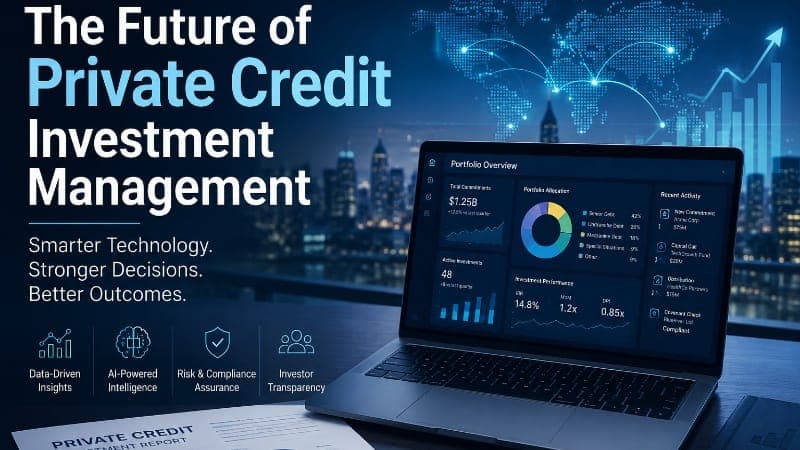
The investment management industry is evolving faster than ever. As private credit markets expand and institutional investors demand greater transparency, fund managers are under increasing pressure to streamline operations, improve compliance, and make faster investment decisions. Traditional workflows powered by spreadsheets and disconnected software are no longer enough to meet these expectations. Today, successful asset managers are embracing integrated technology platforms that centralize data, automate reporting, and enhance portfolio oversight. This digital transformation is not simply about reducing manual work—it is about gaining a competitive advantage in an increasingly complex financial landscape.
## The Growing Complexity of Private Credit
Unlike traditional public market investments, private credit portfolios often involve customized loan agreements, complex covenant monitoring, multi-currency transactions, and extensive investor reporting. Managing these activities manually creates several challenges:
* Data scattered across multiple systems
* Increased operational risk
* Time-consuming compliance processes
* Inconsistent investor reporting
* Higher chances of human error As investment portfolios continue to grow, firms need a centralized solution capable of handling every stage of the investment lifecycle.
## Why Digital Infrastructure Matters
Modern investment firms are shifting toward cloud-based platforms that create a single source of truth for operational, financial, and investor data. Instead of relying on multiple disconnected applications, firms can unify deal management, portfolio monitoring, fund operations, and reporting within one secure environment. According to Pepper, its platform was specifically developed by professionals with real-world experience in alternative asset management, helping firms replace fragmented workflows with an integrated investment management system. This approach significantly improves operational efficiency while reducing reconciliation errors across teams.
## The Role of Artificial Intelligence in Investment Management
Artificial intelligence is no longer limited to consumer applications. Financial institutions are increasingly using AI to improve investment operations and identify opportunities more efficiently. Modern AI-powered investment platforms can assist firms by:
* Extracting data from financial documents
* Monitoring covenant compliance
* Identifying portfolio risks
* Generating operational insights
* Supporting investment decision-making
* Automating repetitive administrative tasks The real value comes when AI works with structured investment data rather than isolated spreadsheets or disconnected databases.
##How Automation Reduces Operational Costs
One of the biggest advantages of adopting modern investment management software is the ability to reduce operational costs without compromising performance. Manual workflows require significant time from investment analysts, compliance teams, operations professionals, and finance departments. Every spreadsheet update, portfolio reconciliation, and investor report consumes valuable hours that could otherwise be spent on strategic activities.
Automation helps eliminate repetitive processes by handling routine tasks such as document management, data synchronization, workflow approvals, and portfolio updates. Instead of manually transferring information between systems, investment teams can rely on automated processes that improve both speed and accuracy.
As firms grow and manage more investments, automation becomes increasingly valuable. Rather than hiring additional operational staff to keep pace with portfolio expansion, organizations can leverage technology to scale efficiently while maintaining high standards of accuracy and compliance.
## Centralized Deal Management
Every investment begins with sourcing and evaluating potential opportunities. Unfortunately, many firms still rely on email chains and spreadsheets to manage their deal pipelines. A centralized deal management platform enables investment teams to:
* Track opportunities in real time
* Store due diligence documentation
* Collaborate across departments
* Monitor deal progress
* Reduce duplicate work Having every team working from the same dataset improves both speed and accuracy throughout the investment process.
## Improving Investor Reporting
Investor expectations continue to rise. Limited partners expect timely, transparent, and accurate reporting regarding fund performance and portfolio activity. Generating these reports manually often requires collecting data from multiple systems before reconciling inconsistencies. Integrated reporting solutions eliminate much of this manual effort by automatically generating dashboards and investor reports from a unified database. This not only saves time but also strengthens investor confidence.
##Data Analytics Is Becoming a Competitive Advantage
Data has become one of the most valuable assets in the investment industry. Organizations that can effectively collect, organize, and analyze investment data gain deeper insights into portfolio performance, borrower behavior, market trends, and potential risks.
Advanced analytics dashboards enable firms to monitor key performance indicators (KPIs), identify underperforming assets, evaluate sector exposure, and compare historical investment performance.
Predictive analytics can also assist investment teams by highlighting trends that may otherwise remain hidden within large datasets. These insights support better capital allocation and more informed investment strategies.
Instead of reacting to market changes after they occur, firms can make proactive decisions based on real-time intelligence.
##Better Collaboration Across Investment Teams
Investment decisions rarely involve a single department. Portfolio managers, analysts, legal advisors, compliance officers, finance teams, and investor relations professionals all contribute to the investment lifecycle.
Without an integrated platform, communication often becomes fragmented across emails, spreadsheets, and multiple software applications. This fragmentation increases the likelihood of duplicate work, outdated information, and missed deadlines.
A centralized investment management system allows every stakeholder to access real-time information from a shared platform. Team members can collaborate more effectively, review investment documentation, monitor approval workflows, and track ongoing portfolio performance without switching between multiple applications.
Improved collaboration leads to faster decision-making and a more efficient investment process from origination through portfolio management.
##Cloud Technology Is Transforming Investment Operations
Cloud computing has fundamentally changed how financial organizations manage technology infrastructure. Traditional on-premise software often requires expensive hardware, ongoing maintenance, software upgrades, and dedicated IT resources.
Cloud-based investment management platforms eliminate many of these challenges by providing secure access from virtually anywhere while ensuring automatic software updates and improved system reliability.
This flexibility has become especially important as investment firms increasingly support hybrid and remote work environments. Portfolio managers and investment professionals can securely access critical information whether they are meeting clients, traveling, or working from different office locations.
Cloud infrastructure also improves business continuity by reducing the risks associated with hardware failures and local server outages.
## Compliance Has Become More Important Than Ever
Regulatory requirements continue to increase across global financial markets. Investment managers must now maintain detailed records, audit trails, risk controls, and reporting standards that satisfy both regulators and investors. A modern investment platform helps firms by:
* Maintaining complete audit histories
* Standardizing documentation
* Tracking compliance workflows
* Monitoring regulatory obligations
* Reducing operational risk Automation allows compliance teams to focus on higher-value activities rather than repetitive administrative tasks.
##Data Analytics Is Becoming a Competitive Advantage
Data has become one of the most valuable assets in the investment industry. Organizations that can effectively collect, organize, and analyze investment data gain deeper insights into portfolio performance, borrower behavior, market trends, and potential risks.
Advanced analytics dashboards enable firms to monitor key performance indicators (KPIs), identify underperforming assets, evaluate sector exposure, and compare historical investment performance.
Predictive analytics can also assist investment teams by highlighting trends that may otherwise remain hidden within large datasets. These insights support better capital allocation and more informed investment strategies.
Instead of reacting to market changes after they occur, firms can make proactive decisions based on real-time intelligence.
## Operational Efficiency Drives Better Returns
Operational excellence directly impacts investment performance. When investment professionals spend less time updating spreadsheets and reconciling data, they have more time to:
* Analyze markets
* Evaluate investment opportunities
* Strengthen investor relationships
* Improve portfolio performance Technology becomes a strategic advantage rather than simply an operational necessity.
## Choosing the Right Investment Technology
Selecting investment software should involve more than comparing feature lists. Decision-makers should evaluate factors such as:
* Scalability
* Security
* Cloud infrastructure
* Ease of implementation
* Integration capabilities
* User experience
* Industry specialization Purpose-built platforms designed specifically for private credit and alternative asset managers generally provide stronger long-term value than generic CRM or financial software. Organizations looking to modernize their investment operations can explore platforms lik private credit investment management software, which combines deal management, portfolio monitoring, investor reporting, compliance, and analytics within a unified cloud-based infrastructure.
## Security Cannot Be Overlooked
Financial institutions manage highly sensitive information, making cybersecurity a critical priority. Leading cloud platforms typically include:
* Encryption at rest and in transit
* Role-based access controls
* Secure cloud architecture
* Audit logging
* Backup and disaster recovery These features help firms protect confidential investment data while meeting enterprise security requirements.
## The Future of Alternative Asset Management
The future of investment management will be increasingly data-driven. Firms that embrace automation, artificial intelligence, and integrated investment platforms will be better positioned to adapt to changing market conditions, satisfy investors, and maintain regulatory compliance. Rather than replacing investment professionals, technology empowers them to make more informed decisions with greater confidence and speed. As private credit continues to expand globally, organizations investing in modern digital infrastructure today will likely gain a significant competitive advantage tomorrow.
## Conclusion
Investment management is entering a new era where operational efficiency, real-time analytics, and intelligent automation are becoming essential rather than optional. Firms that continue relying on manual processes risk falling behind as portfolios become more complex and investor expectations continue to rise. By adopting integrated, cloud-based investment platforms, asset managers can simplify operations, improve reporting accuracy, strengthen compliance, and unlock better decision-making across the entire investment lifecycle. In an increasingly competitive market, technology is no longer just a support function—it is a key driver of long-term growth and sustainable success.
📖 Read more blogs: Jorvea — Free Guest Blogging & Content Publishing Platform
Frequently Asked Questions
What is private credit investment management software?
Private credit investment management software is a digital platform that helps firms manage deal pipelines, portfolios, investor reporting, compliance, and operational workflows in one centralized system.
Why is investment management software important for private credit firms?
It improves efficiency by automating manual tasks, reducing errors, enhancing compliance, and providing real-time insights for better investment decisions.
How does AI improve investment management?
AI helps automate data extraction, identify portfolio risks, generate actionable insights, monitor compliance, and support faster, data-driven investment decisions.
What features should businesses look for in investment management software?
Look for portfolio management, deal tracking, investor reporting, compliance monitoring, cloud accessibility, automation, analytics dashboards, and secure data management.