India Data Center Market: Growth, Trends & Outlook
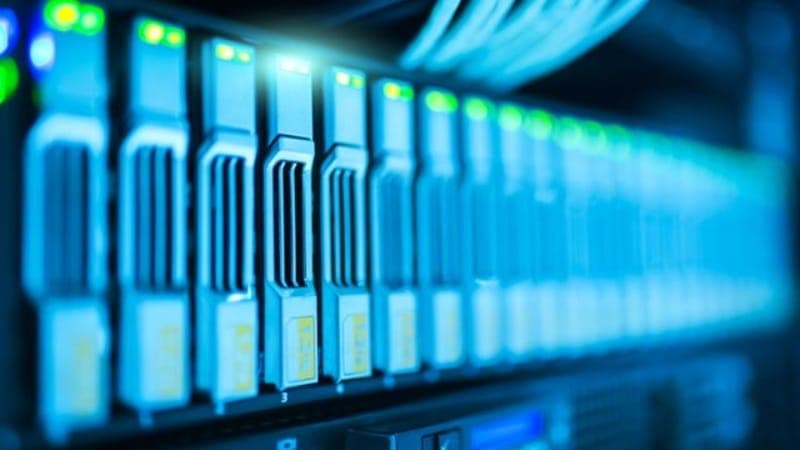
The India Data Center Market -- An Accelerated Transformation from Government Digital initiatives to expanding cloud service offerings and exponential rise in internet users, data centers form the fundamental infrastructure underlying the country's accelerated digital growth journey. Based on recent market analysis, the India Data Center Market size was recorded at around USD 5,031.81 million in the year 2025 and is estimated to witness a considerable growth up to USD 18,818.31 million by 2035, growing at a strong CAGR of 14.10% during the forecast period. This article continues to be among Asia's most lucrative destinations for data centers. The rapid growth is being underpinned by India’s several submarine cable landing sites on its western and eastern coasts, a well-developed power grid, and one of the world’s biggest talent pools for engineers and techies. Combining to establish a stronger alternative to local hosting, these physical advantages allow India to transition from a local choice for hosting data to a credible global player with options competing for global attention against rivals like
Why the India Data Center Market Is Booming
Several combined trends are contributing to exponential growth of the India Data Center Market:
• digitalise Everything including e-governance, payments to smart cities, has rapidly boost demand for reliable data infrastructure. These flagship initiatives like the National e-Governance Plan, Aadhaar-linked services, and UPI are already churning vast amounts of transactional data which require low latency storage and processing, forcing public and private sectors to invest huge amounts on data center capabilities within the country.
• Explosion of Internet Users: India now boast of close to 900 million users, the second largest in the world. This significant number of users generate humongous amounts of data that are required to be hosted locally in India for effective, efficient storage, analysis & management. Even as smartphone penetration increases in Tier-2 and Tier-3 towns of India, the country is projected to contribute more than 100 million internet users, more than doubling the video, social, and transaction data requiring to be stored within India.
• 5G Rollout: As the whole of country will move towards full roll-out of the 5G network, the usage of data consumption will rise at a huge pace, requiring edge computing and distributed data centers at the tier-2 and tier-3 cities. Already Telecom providers have started collaborating with data center providers for colocation of edge node near major population centers to minimise latencies for applications such as mobile gaming, smart connected cars, and IIOT,
• Cloud Adoption by Enterprises: Indian businesses, both tiny startups and established conglomerates, are now rapidly moving to cloud. The growing trend has also sparked demand for local data center investment by hyperscale's. Banking, financial services and insurance (BFSI), e-commerce and healthcare sectors are early adopters because these are high growth sectors that often prefer a hybrid multi-cloud strategy and need in-country data infrastructure for compliance and performance
• Data Localization Regulations: Also driving Indian data centre growth are country-specific data protection regulations, the latest among them being the Digital Personal Data Protection Act, 2023 (DPDPA), which specifies particular types of data be stored inside Indian borders. Reserve Bank of India mandates for payment data for individual sectors and the Ministry of Electronics and Information Technology guidelines add weight to this phenomenon and will drive global technology giants to increase or build new local data center capacities instead of using existing offshore facilities for storing data.
Key Segments Shaping the Market
The India Data Center Market is segmented across multiple dimensions:
By Type
• Investment in the Hyperscale data centre vertical is driving a growth in the total data centre infrastructure across India, where global tech firms such as Amazon Web Services (AWS), Microsoft (Azure) and Google (Cloud) are investing in capacity expansion projects. Hyperscale’s are also signing long-term PPAs for power for renewable energy for their campuses in India, underscoring their massive ambitions and commitment towards their sustainability commitments
• Mid-sized businesses looking to achieve affordable and managed infrastructure while avoiding the costs associated with building their own data centers. This prompted colocation facilities to develop flexible pay-as-you-go service models so that companies only have to scale rack space up or down when they need to, avoiding large capital investments.
• Edge data centers are increasingly taking root in tier-2 cities with increasing focus on low latency applications such as gaming, autonomous vehicles and real time data analytics. A range of Tier-II & Tier-III cities like Indore, Lucknow, Bhubaneswar, and Kochi are early edge hubs, facilitated by strengthening fibre infrastructure and state initiatives for decentralizing the data center sprawl in India beyond the metro regions.
By Geography
Top data centers in Mumbai, Chennai, Hyderabad, Pune and Delhi NCR are considered, with power, connectivity and skilled talent the primary draw, but cities like Bengaluru and Kolkata are slowly finding favor, especially because of lower costs of land and attractive policies on investment. While Mumbai itself may contribute a large portion to the country’s total operational data center capacity as the international access point of the country, the cities of Hyderabad and Chennai with the latest wave of hyperscale capacity being invested in thanks to state incentive schemes, infrastructure stability and access to the huge base of engineering talent in these cities, will emerge as the fastest growing data center corridors in the coming 5 years.
Major Trends Transforming the India Data Center Market
• Green Data Centers: Sustainability is rapidly shifting up the agenda and operators are beginning to commit resources towards renewable energy solutions, liquid cooling technologies and AI-based energy management systems with a view to de-carbonising their infrastructure and achieving net-zero emissions. Many large players are also committing to powering most of their operations with renewable electricity from solar and wind sources in the early 2030s, and green building certificates, LEED, and IGBC are increasingly becoming non-negotiable prerequisites for designing new sites.
• AI and Machine Learning Workloads: AI innovation boom sparking growth in GPU-powered, ultra-high-density computing facilities India poised to become an AI innovation hub; Data center providers making necessary facility upgrades to accommodate intensive AI training, and inference requirements. This transition has given rise to a need for dramatically more power densities per rack, leading operators to re-evaluate the electrical infrastructure and cooling architecture that can adequately support GPU clusters for the needs of both the training of, and operation of large language model workflows.
• Foreign Direct Investment Surge: In India, global data center providers and REITs, or real estate investment trusts, are pumping in billions of dollars into facilities. In countries like Singapore and in India, for example NTT, Equinix, and STT GDC have expanded their local presence. Sovereign wealth funds and global private equity players are also marking their entry into the sector via joint ventures with domestic developers, indicative of increased confidence in the long-term value proposition of India's digital infrastructure asset class.
• Modular and Prefabricated Data Centers: In order to meet this demand operators are investing in modular facilities that can be expanded quickly in response to demand, without the lengthy building process of established structures. Prefabricated units, built in an off-site factory and deployed in location, shave years of deployment time to months, allowing operators to gain significant speed against the rapidly increasing velocity of enterprise and hyperscale requirements.
• Emergence of AI Ready and High-Density Colocation, a new product set, these AI Ready colocation solutions will support higher density racks with cooling infrastructure such as liquid-cooled racks and target customers deploying generative AI and large scale analytics workloads in colocation.
• Integrating Renewable Energy, It is common for data centre firms to seek locations alongside renewable energy regions and to sign direct power agreements with renewable suppliers in order to cut costs and emissions and take some pressure off existing power systems.
Investment and Funding Landscape
The Indian Data Center Market has experienced an accelerated inflow of capital in recent years, with global infrastructure funds, sovereign wealth funds and PE investors seeing the sector as an un-correlated, long-duration asset that is similar to toll roads or utilities. Domestic conglomerates have also started coming into the fray by partnering with major international operators – bringing on the local real estate and regulatory knowledge combined with global technical knowhow. State governments are also trying to lure this capital through single window clearances, lower power tariffs and capital subsidies in their respective policies designed to promote data centers.
According to the industry, investment commitments in Indian Data center infrastructure, cumulative, could run up to several tens of billions of dollars in the next ten years as operators look to tie up with land banks, power and connectivity to serve key demand points.
This inflow is creating ripple effects in downstream industries such as specialized construction, cooling equipment manufacturing, and specialized power equipment suppliers.
Challenges to Watch
Despite the optimistic trajectory, the India Data Center Market faces some notable hurdles:
• But the quest for stable energy continues; a major hurdle for developing economies beyond metro areas. Reliability outside the large metro clusters is uneven across all operators leading to the need to implement the use of costly diesel or gas based backup power and battery storage systems, which increases the capex and open costs to an even greater degree.
• Real estate procurement in central city neighbourhoods is restricted by its high cost and difficult regulation of approval. Long planning and permitting delays coupled with piece by piece acquisition records could result in project durations to increase by many months, which will drive increasingly more providers to outlying areas and peripheries in search of space.
• Skills shortage of specialised staff -- especially concerning aspects like cyber security, architecture of the data network and administration of the data center facilities -- may limit growth if it isn't met through a systematic training program. Industry groups, with participation of major operators, are starting to work with universities and colleges with specialized technical training programs to create a full degree curriculum in data centre engineering in order to address the shortfall over the coming years.
• Cooling technology decisions are beginning to change with concern over water availability prompting users to consider using air-cooled and closed loop liquid cooling systems instead of standard open-loop liquid cooling to conserve water. Water stress across a number of significant data center clusters including portions of Chennai and Delhi NCR is forcing operators to consider water positive commitments as well as look into other coolants to support their long-term sustainability roadmaps.
Conclusion
A tipping point in the India Data Center Market A young & digitally forward demographic, rapidly expanding enterprise cloud, and an encouraging regulatory regime that welcomes investment pave the way for a robust, long-term future growth of the India Data Center Market. Increasing consumption through Artificial intelligence, a digital India, adoption of 5G technology, and the rise in demand for local hosting and regulatory requirements further accelerate the growth well into the next decade. Expert Market Research aims to support clients like you by providing a granular view of market trends, competitor analyses, and investment potential across the India Data Center Market. Our expert-led analyses, supported by industry leading primary and secondary research techniques, assist stakeholders in the decision-making process. Given the hyper-scale, colocation, and edge facilities’ rapid deployment in traditional as well as new locations across both developed and developing countries, India is likely to be a leading digital infrastructure hub offering sustained opportunities to both operators and customers.
📖 Read more blogs: Jorvea — Free Guest Blogging & Content Publishing Platform
Dharma Singh
Dharma Singh Mahar is an analyst and writer with a keen interest in global markets and consumer trends. He enjoys exploring diverse food and beverage cultures from around the world and sharing insights that connect industry knowledge with everyday experiences.
Contributor at Jorvea — Free Guest Blogging & Content Publishing Platform
Frequently Asked Questions
What is the current size of the India Data Center Market?
The India data center market was valued at usd 5,031. 81 million in 2025 and it is projected to grow at a cagr of 14. 10% to reach approximately usd 18,818. 31 million by 2035. Driven by increasing adoption of cloud services, digital transformation efforts, and increasing demand for ai ready infrastructure
Which cities are the leading data center hubs in India?
Dominant data center hubs include Mumbai, Chennai, Hyderabad, Pune and Delhi NCR. Mumbai tops the list thanks to the location of submarine cable landing stations and financial industry interest, whereas, Mumbai, Chennai are the growing corridors of data centre space supported by the favourable policies from the state and lower real estate price tags.
How is government policy influencing the India Data Center Market?
The Indian government has identified data centers as infrastructure, allowing companies the benefits of a concessionary rate of interest on finances as well as land access. States including Maharashtra, Telangana and Tamil Nadu are already following their own Data Centre Policies, which provides them with the ease of doing business in the region as well as discounts and concessions on taxes, single window clearances and discounts on power tariffs. Furthermore, the upcoming Indian Digital Personal Data Protection Act (DPDPA) is forcing businesses to develop their own private data centre space or obtain on lease in India, in accordance to the rules and regulations of the nation.
What drives India Data Center Market Growth?
Factors that are expected to drive growth in India are increasing cloud adoption, surge in AI & Machine Learning workload requirements that need High Density Compute, expanding internet and smart device penetration, and growing data localization push from organizations. Increased hyperscale and colocation investor commitment, along with the enhancement of power and connectivity in the market.
_1778305206231.jpg&w=1200&q=75)
_1781324198066.webp&w=1200&q=75)
_1782771261957.png&w=1200&q=75)