

How Can Crepe Fabric Support Modern Textile Production?
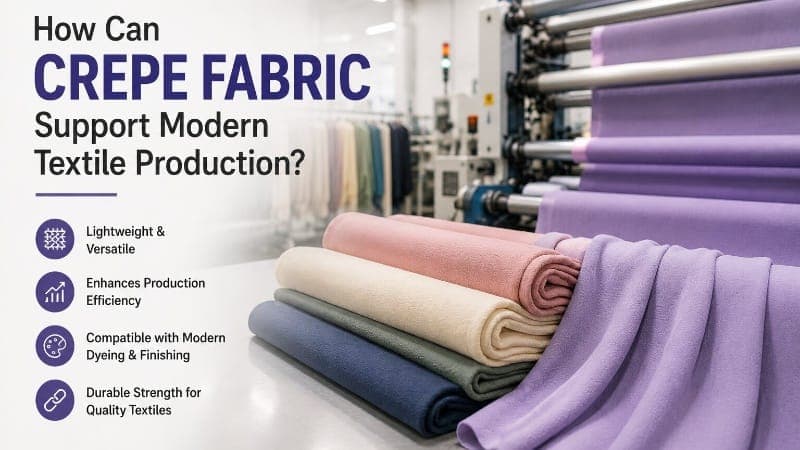
Modern textile production requires materials that can balance visual appeal, functionality, versatility, and efficient processing. Manufacturers and textile businesses increasingly look for fabrics that can adapt to different product categories while maintaining a distinctive appearance and dependable performance. Among the many options available, crepe fabric continues to hold a useful position across contemporary textile applications.
The appeal of this material comes from its characteristic textured surface, fluid drape, and broad range of possible constructions. Depending on the fiber content, weave, and finishing technique, it can support products ranging from fashion garments to lightweight textile articles. These qualities make it relevant to manufacturers seeking materials that can meet changing market preferences.
For businesses sourcing crepe fabric in Pakistan, understanding its role in modern production is important for selecting suitable materials, managing product quality, and matching fabric characteristics with intended applications. The right choice can influence everything from garment appearance and comfort to production efficiency and final market positioning.
Why Does Crepe Fabric Remain Relevant to Modern Textile Manufacturing?
The textile industry constantly evolves in response to fashion trends, consumer preferences, production technology, and changing commercial requirements. Fabrics that can adapt to these factors tend to remain valuable across different market segments.
Crepe is recognized for its distinctive texture, which can range from subtle graininess to a more pronounced crinkled appearance. This surface character gives finished textile products a unique visual identity without always requiring elaborate decorative treatments. For manufacturers, this can provide an effective foundation for creating products with visual depth.
Its adaptability also contributes to its continued relevance. Depending on its composition, crepe can be lightweight, flowing, structured, or moderately resilient. These variations allow manufacturers to select a suitable construction for specific applications rather than treating a single fabric type as a universal solution.
Other factors supporting its use include:
- Its textured surface can add visual interest to garments without extensive surface embellishment.
- Fluid drape makes wide varieties suitable for flowing silhouettes and contemporary fashion designs.
- Different fiber compositions allow manufacturers to match fabrics with varied performance expectations.
- Its broad application potential supports production across fashion, apparel, and selected textile categories.
- Multiple finishing possibilities allow manufacturers to create distinct textures and appearances for different markets.
These characteristics make crepe relevant to manufacturers that need a balance between design flexibility and practical production requirements.
Which Properties Make Crepe Suitable for Different Textile Applications?
The performance of any textile material depends on its fiber composition, manufacturing method, yarn structure, weave, and finishing process. Therefore, not every type of crepe will provide the same characteristics.
Nevertheless, several common properties make this fabric attractive for modern textile production.
Distinctive Surface Texture
The textured appearance is one of its most recognizable qualities. Depending on construction, the surface may have a fine grain, pebbled finish, or more noticeable crinkled effect. This characteristic can help finished products achieve a sophisticated appearance without relying entirely on prints or embellishments.
Fluid Drape
Wide varieties are valued for their ability to fall naturally around the body. This quality makes them particularly useful for garments where movement and silhouette are important. Dresses, blouses, skirts, scarves, and other fashion items can benefit from a material that creates natural flow.
Versatile Weight Options
Crepe materials are available in different weights and constructions. Lightweight options may suit delicate apparel, while heavier varieties can provide greater structure for tailored or formal garments.
Broad Fiber Compatibility
Crepe can be manufactured using different fiber types, including natural, regenerated, and synthetic fibers. Each composition can affect softness, durability, moisture behavior, wrinkle resistance, and care requirements.
This variety allows textile manufacturers to select materials based on the final product's intended use rather than relying on a single specification.
What Role Does Fabric Selection Play in Production Efficiency?
Material selection has a direct impact on manufacturing operations. A fabric may look attractive but still create challenges if its properties do not match the production process.
Textile manufacturers therefore need to consider more than appearance when selecting materials.
Cutting and Handling
Some lightweight fabrics can shift during cutting or require careful handling to maintain accurate pattern placement. Production teams may need suitable equipment, experienced operators, and appropriate cutting methods.
Sewing Performance
Different fabric constructions behave differently under sewing machines. Thread selection, needle type, stitch length, and machine settings can influence the final result.
Finishing Requirements
Some varieties may require specific finishing processes to achieve the desired texture, softness, color, or appearance. Understanding these requirements before production can help reduce inconsistencies.
Quality Control
Manufacturers should evaluate fabric rolls for issues such as:
- Consistent texture across rolls helps maintain a uniform appearance throughout production batches.
- Stable color matching reduces variation between individual garments and finished textile products.
- Even width simplifies pattern placement and supports efficient material utilization during cutting.
- Controlled shrinkage helps manufacturers maintain garment dimensions after washing or finishing.
- Consistent weight allows production teams to maintain predictable handling and product characteristics.
Effective quality control is particularly important for manufacturers producing at commercial scale, where small variations can affect large quantities of finished products.
How Does Crepe Fabric Support Product Differentiation?
Modern textile markets are highly competitive. Manufacturers are competing not just through pricing but also through design, comfort, quality, performance, and brand recognition.
A distinctive fabric surface can contribute to product differentiation.
Visual Identity
The texture of crepe can make a garment appear different from products made with completely smooth materials. This provides designers with another tool for developing recognizable collections.
Design Flexibility
Depending on the composition, the material can support plain colors, printed designs, layered constructions, and decorative techniques. This flexibility enables manufacturers to adapt products to seasonal trends.
Tactile Experience
Consumers often judge textile products through both visual and tactile impressions. A textured surface can add depth to the sensory experience of a finished garment.
Collection Development
By adjusting weight, texture, color, and fiber composition, manufacturers can create varied collections designed for different target audiences.
For brands operating in competitive apparel markets, these characteristics can help create products that feel more distinctive without requiring highly complicated manufacturing techniques.
What Should Manufacturers Consider Before Sourcing Crepe?
Choosing the right material requires a clear understanding of the product's intended purpose. A fabric selected for a flowing summer garment may have completely different requirements from one intended for formalwear or structured apparel.
Fiber Composition
The fiber content affects softness, breathability, durability, care requirements, and overall performance. Buyers should verify the exact composition before placing commercial orders.
Weight and Thickness
Fabric weight influences drape, opacity, comfort, and suitability for different garments. Lightweight options may work well for flowing designs, while heavier constructions may provide greater structure.
Width
Usable fabric width can affect pattern efficiency and production costs. Manufacturers should confirm the actual usable width when calculating material requirements.
Color Consistency
For large production runs, consistent color across batches is essential. Buyers should establish acceptable color tolerances before production begins.
Shrinkage and Dimensional Stability
Testing for shrinkage can help prevent unexpected changes in finished garment dimensions after washing or finishing.
Minimum Order Requirements
Commercial buyers should confirm minimum order quantities, available stock, production lead times, and replenishment capabilities before selecting a supplier.
These factors can influence the total cost of production just as much as the initial material price.
How Can Better Sourcing Improve Textile Production?
Reliable sourcing is an important part of modern textile manufacturing. Even a well-designed product can face production delays if materials arrive late, specifications change unexpectedly, or supply continuity becomes difficult.
A structured sourcing approach can help manufacturers manage these risks.
Supplier Evaluation
Businesses should assess suppliers based on product consistency, communication, technical documentation, delivery capabilities, and commercial reliability.
Specification Matching
The material supplied should match the technical requirements agreed upon during the purchasing process. Clear specifications can reduce misunderstandings between buyers and suppliers.
Supply Planning
Manufacturers should estimate future material requirements based on production schedules and expected demand. Early planning can reduce pressure during peak periods.
Quality Verification
Pre-shipment inspection, sample approval, and batch testing can help identify potential issues before materials enter large-scale production.
Logistics Coordination
International sourcing may involve documentation, customs procedures, shipping arrangements, and warehousing. Coordinating these elements can help maintain production continuity.
For industrial and textile buyers, sourcing partners that understand these requirements can provide value beyond simply supplying the material. Avon Commercial's broader sourcing model is relevant in this context because businesses may require support across procurement, documentation, quality checks, and logistics.
What Is the Future Potential of Crepe in Textile Production?
The textile industry is moving toward greater flexibility, faster product cycles, and more conscious material selection. Manufacturers are increasingly expected to respond quickly to changing consumer preferences while maintaining consistent product quality.
Within this environment, versatile fabrics can continue to hold commercial value.
Sustainable Material Development
The future of textile production is likely to place greater attention on fiber origins, resource consumption, recyclability, and responsible manufacturing. Crepe constructions made with more sustainable fiber options may gain relevance as brands evaluate their environmental objectives.
Digital Textile Design
Advances in digital printing and textile design technologies can create new possibilities for patterned and customized fabric collections. Textured materials can provide additional depth to these designs.
Customization
Consumers increasingly seek products that feel distinctive. Manufacturers can respond through variations in texture, color, weight, and finishing.
Performance-Oriented Fabrics
Future development may combine the visual characteristics associated with crepe with properties such as improved durability, moisture management, easy care, and dimensional stability.
These developments could broaden the material's relevance beyond traditional fashion applications.
Why Is Material Versatility Important for Textile Businesses?
Textile businesses operate in markets where demand can change rapidly. A material that can serve several product categories gives manufacturers more flexibility when developing collections and responding to customer requirements.
Crepe can support this flexibility because different constructions can address different needs. One variety may be suitable for lightweight apparel, while another may provide greater structure for formal garments.
For businesses involved in textile sourcing, the ability to access varied material options can also simplify procurement planning. Instead of searching for a completely different material for every product concept, manufacturers can evaluate related fabric constructions according to weight, composition, finish, and intended use.
This approach can support:
- Flexible material selection allows manufacturers to respond to different product concepts and seasonal market requirements.
- Diverse fabric constructions can help businesses serve multiple customer segments through varied textile collections.
- Reliable sourcing reduces the risk of production interruptions caused by inconsistent material availability.
- Technical specifications help buyers select fabrics that match manufacturing processes and final product expectations.
- Long-term supplier relationships can improve communication and simplify recurring procurement requirements.
For a sourcing business like Avon Commercial, this creates an opportunity to connect textile manufacturers with materials that align with their operational and commercial needs. The focus is not simply on supplying a fabric but on supporting the broader requirements of industrial buyers.
Conclusion
Crepe continues to hold a useful position in modern textile production because of its distinctive texture, adaptable construction, fluid drape, and broad potential across fashion and apparel applications. Its ability to work with different fiber compositions and manufacturing approaches gives textile businesses flexibility when developing products for changing markets.
For manufacturers, successful use depends on selecting the right construction rather than simply choosing a material based on appearance. Fiber content, weight, width, color consistency, shrinkage, finishing, and supply reliability all contribute to the final production outcome.
As textile markets become more competitive, material versatility can help manufacturers respond to changing consumer expectations while maintaining efficient production processes. Reliable sourcing, technical evaluation, and consistent quality control can further support this approach.
For B2B textile buyers and manufacturers, working with an experienced sourcing partner can simplify procurement and help connect material requirements with suitable supply solutions. Avon Commercial's broader focus on industrial sourcing and supply-chain support aligns with the needs of businesses seeking dependable materials for ongoing production.
📖 Read more blogs: Jorvea — Free Guest Blogging & Content Publishing Platform
Frequently Asked Questions
Is crepe suitable for large-scale textile manufacturing?
Yes, suitable varieties can be used for commercial textile production, provided their composition, weight, width, quality, and performance characteristics match the manufacturer's requirements. Consistent sourcing and quality control are important for large production runs.
Which garments are commonly made from crepe?
Common applications include dresses, blouses, skirts, tunics, scarves, formalwear, evening garments, and other fashion products. The exact application depends on the fabric's weight, composition, drape, and finishing.
Does every crepe fabric have the same texture?
No. Texture varies according to fiber content, yarn construction, weaving technique, and finishing process. Some varieties have a subtle grain, while others have a more pronounced pebbled or crinkled surface.
What should buyers check before ordering crepe fabric?
Buyers should review fiber composition, weight, width, color consistency, shrinkage, finishing, minimum order quantities, available stock, lead times, and quality standards before placing a commercial order.
Can crepe support sustainable textile production?
Its sustainability depends primarily on the fibers, manufacturing processes, finishing methods, and supply chain involved. Crepe made from responsibly sourced or recycled fibers may support sustainability goals when combined with responsible production practices.



_1784799298873.png&w=1200&q=75)