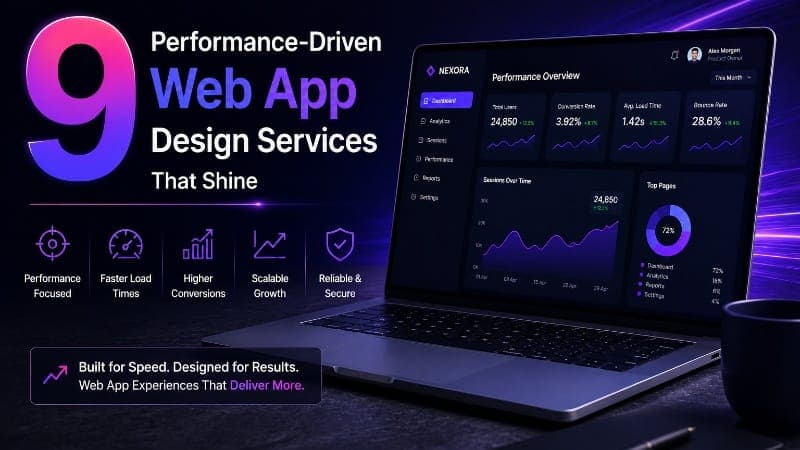
9 Performance-Driven Web App UX Design Services That Shine
amitiA poorly designed web app does not just frustrate users, it costs businesses revenue, trust, and customer retention.
Today’s users expect fast, intuitive, and seamless digital experiences. That is why web app UX design services have become essential for businesses building modern digital products.
This guide covers nine core UX design services that help web apps improve usability, engagement, and long-term performance.
Why Web App UX Design Matters
Users expect digital experiences that are fast, intuitive, and easy to navigate. When a web app feels confusing or slow, users abandon it quickly, often without returning.
Poor UX affects more than usability. It damages customer trust, lowers conversion rates, and weakens long-term retention. Businesses that invest in research-backed UX design consistently outperform competitors because their products solve user problems more effectively.
Modern UX design combines strategy, usability, accessibility, and continuous optimization to create experiences that users genuinely enjoy.
1. User Research and Audience Analysis
Every successful web app starts with understanding its users.
User research includes surveys, interviews, behavioural analytics, and competitor analysis to identify user goals, frustrations, and expectations. This process helps teams make informed decisions instead of relying on assumptions.
Strong research creates user personas and journey maps that guide the entire UX strategy.
2. Information Architecture and User Flow Design
Information architecture organizes your app’s content, features, and navigation so users can find what they need without confusion.
A clear structure reduces friction and improves the overall user journey. When navigation feels natural, users spend less time searching and more time engaging with the product.
User flow design maps the complete path users take through the app, from entry point to final action. This helps businesses create smoother, more intuitive experiences that guide users toward conversions naturally.
3. Wireframing and Low-Fidelity Prototyping
Wireframes create the structural blueprint of a web app before visual design begins.
This stage focuses on layout, navigation, content hierarchy, and functionality without distractions like colours or branding. It allows teams to refine usability early in the process.
Low-fidelity prototypes help stakeholders and users interact with the product concept before development starts. Early feedback at this stage helps prevent expensive revisions later.
4. High-Fidelity UI Design and Design Systems
High-fidelity UI design transforms wireframes into polished visual experiences using colours, typography, spacing, and branding elements.
But effective UI design is not only about aesthetics. Every visual decision affects usability, clarity, and user confidence.
Professional UX teams also create design systems — reusable component libraries that maintain consistency across screens and simplify future development.
5. Interactive Prototyping and User Testing
Interactive prototypes simulate the real app experience without requiring full development.
These prototypes allow users to click through screens, complete tasks, and interact with features in realistic scenarios.
User testing helps teams observe real behaviour, identify friction points, and validate design decisions before launch. This process reduces risk and improves overall usability.
6. Responsive and Cross-Platform UX Design
Users interact with web apps across smartphones, tablets, laptops, and multiple browsers.
Responsive UX design ensures the experience remains smooth and consistent across all devices and screen sizes. Cross-platform optimization also prevents functionality issues between browsers like Chrome, Safari, Firefox, and Edge.
A poor mobile experience can immediately reduce conversions and engagement, making responsive UX essential.
7. Accessibility-First UX Design
Accessibility-focused UX design ensures products are usable for everyone, including people with disabilities.
Features such as keyboard navigation, readable contrast ratios, scalable text, and screen reader compatibility improve the experience for all users.
Accessible design is not just about compliance. It also expands audience reach, improves usability, and creates a more inclusive digital experience.
8. UX Writing and Microcopy Optimization
UX writing includes button labels, onboarding text, error messages, and in-app instructions.
Clear microcopy improves navigation, reduces confusion, and supports higher conversions.
9. UX Audits and Ongoing Optimization
UX design should continue long after launch.
UX audits evaluate usability issues using behavioural data, testing insights, and conversion analysis to identify areas of friction.
Ongoing optimization through A/B testing, heatmaps, and user feedback helps businesses improve engagement, retention, and overall product performance over time.
How These Services Work Together
The real strength of UX design comes from combining all these services into one connected process.
Research informs information architecture. Information architecture shapes wireframes. Wireframes evolve into prototypes, which are then tested with real users.
UI design and design systems maintain consistency, while accessibility and UX writing improve usability across every interaction. Ongoing optimization ensures the product continues improving after launch.
This integrated workflow is what separates high-performing web apps from products users quickly abandon.
What to Look for in a UX Design Partner
A strong UX partner should offer:
- Research-driven design
- Clear workflows and deliverables
- Collaboration with developers
- Accessibility and testing expertise
- Performance-focused optimization
The best UX teams focus on solving user problems, not just creating attractive interfaces.
Conclusion
Great web apps are built through research, testing, structure, and continuous improvement.
Professional web app UX design services help businesses create products that users trust, enjoy, and return to consistently.
Whether you are launching a new product or improving an existing platform, investing in UX leads to stronger engagement, better retention, and long-term growth.
So, what are you waiting for just get connect with our team and get free consultation about you web design.
📖 Read more blogs: Jorvea — Free Guest Blogging & Content Publishing Platform
Flowmaze UX
Contributor at Jorvea — Free Guest Blogging & Content Publishing Platform
Frequently Asked Questions
What is 9 Performance-Driven Web App UX Design Services That Shine?
amitiA poorly designed web app does not just frustrate users, it costs businesses revenue, trust, and customer retention.Today’s users expect fast, intuitive, and seamless digital experiences. That is...
Why is 9 Performance-Driven Web App UX Design Services That Shine important?
This article explains the key aspects of 9 Performance-Driven Web App UX Design Services That Shine in detail, covering essential information and practical insights.
How can I learn more about technology?
Read the full article on Jorvea for comprehensive information about 9 Performance-Driven Web App UX Design Services That Shine and related topics.
_1779434425740.png&w=1200&q=75)